
I picked up my phone last week to check a detail in a novel I was halfway through, and I saw an advertisement for Google’s Play Books app which offered to save me the trouble. Its new AI companion, Book Insights, could summarise the chapters I had already read, remind me who each character was, and explain any phrase I found confusing. I did not need to flip back a page. I did not need to remember a name. The friction of reading, stretching my memory and getting to know the characters, would be suddenly gone.
While the convenience of an app like this might have its appeal, its existence is also a practice challenge for every teacher, librarian, leader and parent right now. Not whether AI can read a book for us. It obviously can. The question is what happens to us when it does.
The research evidence
Maryanne Wolf has spent a career mapping what happens inside the reading brain, and one of her key observations is a useful place to start. Reading is not something humans are naturally designed to do. Unlike speech, which children acquire simply by being spoken to, reading requires the brain to construct entirely new circuits, borrowing and repurposing regions that evolved for vision, language and memory (Wolf, 2018). These circuits are not fixed. They are shaped by what we read, how we read it, and how the skill was taught in the first place (Wolf, 2018, p. 21). Learn to read on a screen that rewards skimming, and the circuit built is a skimming circuit. Learn to read through sustained engagement with demanding text, and different circuits form. When we fully develop our brain to read sustained text, we are capable of “multiple deep-reading processes”, able to link imagery, empathy, inference and critical judgement (Wolf, 2018, p. 12).
Nicholas Carr made a related observation nearly two decades ago, in an essay whose title has become shorthand for this entire conversation: “Is Google making us stupid?” (Carr, 2008). Carr described his own reading concentration eroding under constant online skimming: “Once I was a scuba diver in the sea of words. Now I zip along the surface like a guy on a jet ski” (Carr, 2008). Two forces were doing the damage, he argued: the sheer volume of information pushing us to scan rather than absorb, and a web designed to reward endless scrolling.
What has changed since 2008 is not the diagnosis. It is the treatment on offer. Naomi Baron’s recent work argues that generative AI does not just tempt us to skim. It offers to read for us entirely (Baron, 2025). When a chatbot hands you a summary instead of the text itself, you are not simply receiving less information. You are receiving someone else’s, or something else’s, interpretation, stripped of your own context and your own connections to everything else you have read and lived (University of Chicago Graham School, 2026). Baron calls this a mediated experience; meaning made by a machine and handed to you is not the same as meaning you make yourself.
Rose Horowitch’s recent essay in The Atlantic pulls these threads into a wider claim: we have not become illiterate, she argues, we have become post-literate (Horowitch, 2026). Although her argument draws on the USA as context, it compares closely with the Australian experience. A shocking statistic she presents is that only 16% of Americans read for pleasure on a given day in 2023, while 57% placed a bet, making gambling the more common leisure pursuit (Horowitch, 2026). Horowitch also points out how popular texts are becoming simpler in response to this shift away from reading; she compares the opening line of the English translation of Dr Zhivago, the 1958 best seller, with the opening line of the most popular novel written for adults in 2025, Onyx Storm, a romantasy adventure. Which do you find more appealing?
Zhivago:“On that warm gray morning in the mountains, Zhivago felt sorry for the Tsar, was disturbed at the thought that such diffident reserve and shyness could be the essential characteristics of an oppressor, that a man so weak could imprison, hang, or pardon.”
Onyx Storm:“A muscle in his square jaw ticks as he stares down at me, rippling the tawny-brown skin of his stubbled cheek.”
Moral panics about new media have happened before. This same anxiety can be traced through history; Socrates worried writing would destroy memory; nineteenth-century critics blamed the newspaper for shallow thinking (Kimball, as cited in Horowitch, 2026). However, Horowitch’s argument is that this shift is structural rather than moral: as fewer people read at all, reading is reverting to a skill held by a smaller portion of society, much as it was before mass literacy (Horowitch, 2026). The consequences may be already visible. We see the rise of the populist politician who writes as they speak and delivers policy in soundbites built for a social media feed rather than a printed page, the rise of influencers whose videos and podcasts prioritise listening and speaking over reading, and a decline in support for the humanities and social sciences, disciplines that preference long-form argument over dot points and diagrams (Horowitch, 2026).
Marshall McLuhan predicted a post-literate society in 1962, tied to television’s arrival in every home (Horowitch, 2026). He was not the only one who saw this coming, if from a very different direction. In 1992, a hip-hop group called The Disposable Heroes of Hiphoprisy released Television, the Drug of the Nation. Three decades on, its central image, a public fed on soundbites instead of sentences, where “sound bite politics are served to the fast food culture” (Disposable Heroes of Hiphoprisy, 1992), reads less like a lyric and more like a description of today. Pop culture sometimes notices what the peer-reviewed literature takes another thirty years to confirm.
Ian O’Byrne pushes the implication further. A post-literate society, he argues, is more dangerous than an illiterate one, because illiteracy invites investment in literacy, while post-literacy invites something else: institutions stepping in to prescribe what gets read, and by whom (O’Byrne, 2026). We can already see how this might pan out, as some US states are legislating which books students must read while others are passing “freedom to read” laws (O’Byrne, 2026). Neither is a neutral act.
My take on this phenomenon
My judgement is that the friction Book Insights removes is not incidental to reading. It is reading. Going back a page to remember who a character is, sitting with a sentence until it resolves, holding several plot threads in your head at once: these are not obstacles between you and the story. They are the cognitive work that builds Wolf’s deep-reading circuits (Wolf, 2018). Remove the friction and you have not made reading easier. You have replaced reading with something else, a lighter and less durable cousin perhaps.
I also think the “this is just another moral panic” defence, while worth taking seriously, undersells what is different this time. Newspapers competed with books for a reader’s attention. AI reading tools compete with the act of reading itself, from inside the same interface, positioned as reading’s helpful friend rather than its replacement. That is a much harder shift to notice, let alone resist.
None of this means every use of AI while reading is corrosive. A student using a summary to choose which of ten novels to read next is doing something different from a student using a summary instead of reading any of them. The distinction that matters is whether AI is extending a reader’s judgement or replacing it, and our tools, platforms and default settings are not currently built to make that distinction for us. We have to make it ourselves, and teach others to make it too.
Immediate practical application
For classrooms, this starts with naming the different kinds of reading students already do, because not all reading is meant to be deep, and pretending otherwise sets an impossible standard. Teach skimming and scanning as legitimate tools for a legitimate purpose. Then protect, deliberately and without apology, blocks of time for the other kind: sustained, uninterrupted engagement with a demanding text, with no AI companion standing by to soften the effort.
For organisations, the parallel is just as concrete. Knowledge workers are being offered the same bargain Book Insights offers readers: let the AI read the report, the policy, the research summary, and tell you what it says. The efficiency case is real. So is the cost. A team that only ever receives pre-digested summaries loses the capacity to notice what the summary left out, whose framing shaped it, and where its confidence outstrips its evidence. My advice to any leader introducing AI reading tools into a team’s workflow is the same distinction I would give a classroom teacher: use them to widen what gets read, never to replace the reading that builds judgement in the first place.
There is also a case for infrastructure, not only individual habit. Libraries, and the associations that support and promote their work, such as Australia Reads, the Australian School Library Association, the Australian Public Library Alliance and the Australian Library and Information Association exist precisely to keep reading visible, valued and available. Their work matters more, not less, as the tools around us make ‘not reading’ the path of least resistance.
We may already be living in a post-literate age, as Horowitch suggests. But post-literate describes where we are, not an instruction for where we have to stay. Every teacher who protects twenty minutes of sustained reading, every leader who reads the source document instead of the summary, is performing a small act of resistance against a well-designed current. Whether that current wins is not a technology question. It is a decision, made one reading choice at a time.
References
Baron, N. S. (2025, August 13). AI is making reading books feel obsolete – and students have a lot to lose. The Conversation. https://doi.org/10.64628/AAI.f4436x7cp
Carr, N. (2008, July 1). Is Google making us stupid? The Atlantic. https://www.theatlantic.com/magazine/archive/2008/07/is-google-making-us-stupid/306868/
Disposable Heroes of Hiphoprisy. (1992). Television, the drug of the nation [Song]. On Hypocrisy is the greatest luxury. 4th & Broadway Records.
Horowitch, R. (2026, July 8). The end of reading is here. The Atlantic. https://www.theatlantic.com/magazine/2026/08/reading-crisis-postliterate-age/687618/
O’Byrne, I. (2026, July 15). Who controls a postliterate society [Substack post]. Digitally Literate. https://substack.com/home/post/p-207015402
The University of Chicago Graham School. (2026, January 21). Reader Bot: What happens when AI reads and why it matters [Video]. YouTube. https://www.youtube.com/watch?v=A6TtA_Wo1I8
Wolf, M. (2018). Reader, come home: The reading brain in a digital world. Harper.
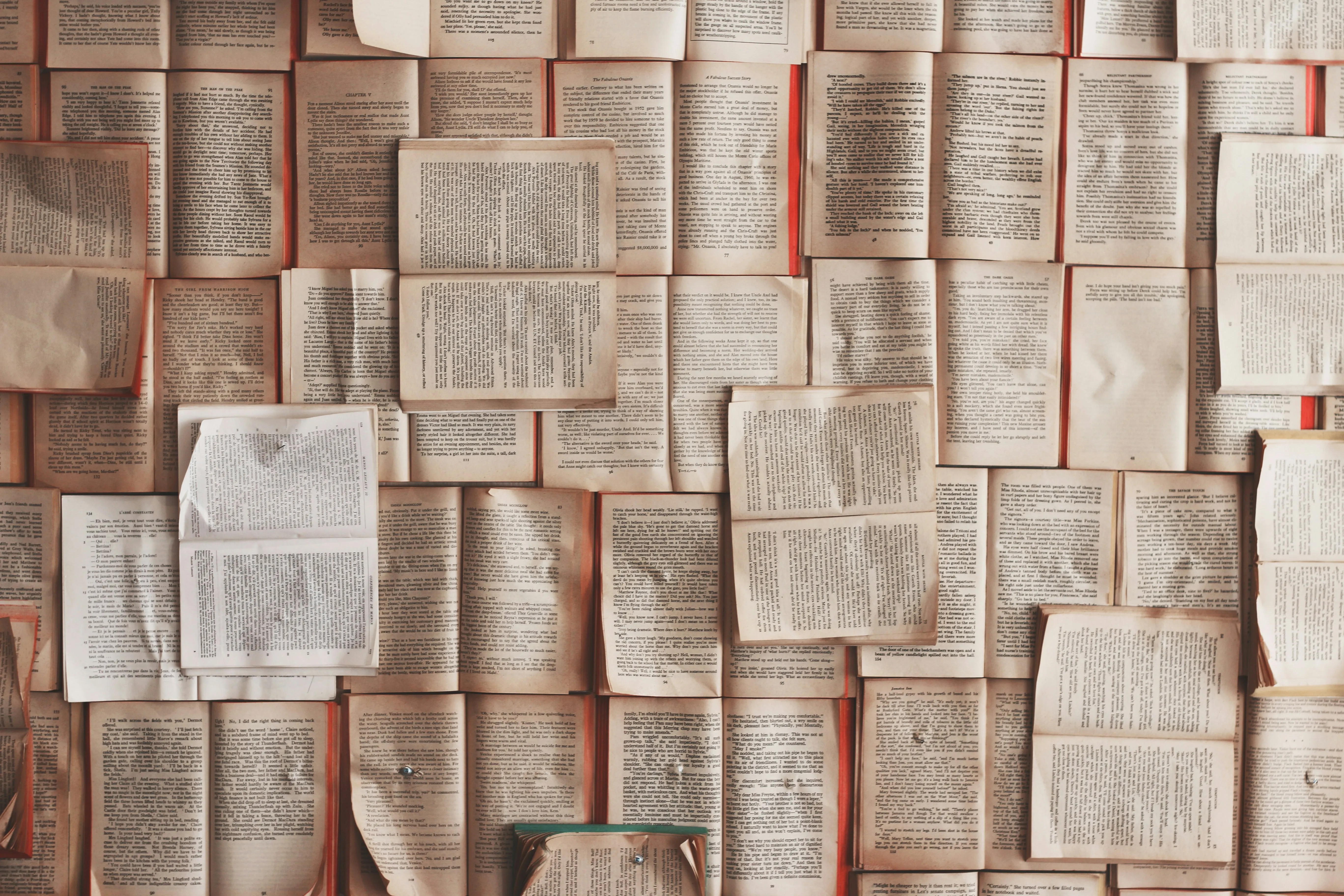
Feature image: Photo by Patrick Tomasso on Unsplash



[…] Consider what students already meet when they jump online. Internet searching is the most frequently reported study activity for both Year 6 and Year 10 students (Friedman et al., 2026), and search now answers rather than points: a study by Oumi found that only 39% of Google AI Overviews proved both correct and fully supported by the sources they cited (Webb, 2026). Cheng et al. (2026) found that AI systems affirm users around 50% more than other humans do, including when the user is in the wrong. Wang and Zhang (2026) found the poorest outcomes not among students who avoided AI, but among those half-using it, spending more effort for less depth. I wrote about the same pattern in reading when I asked who is reading for you now. […]