
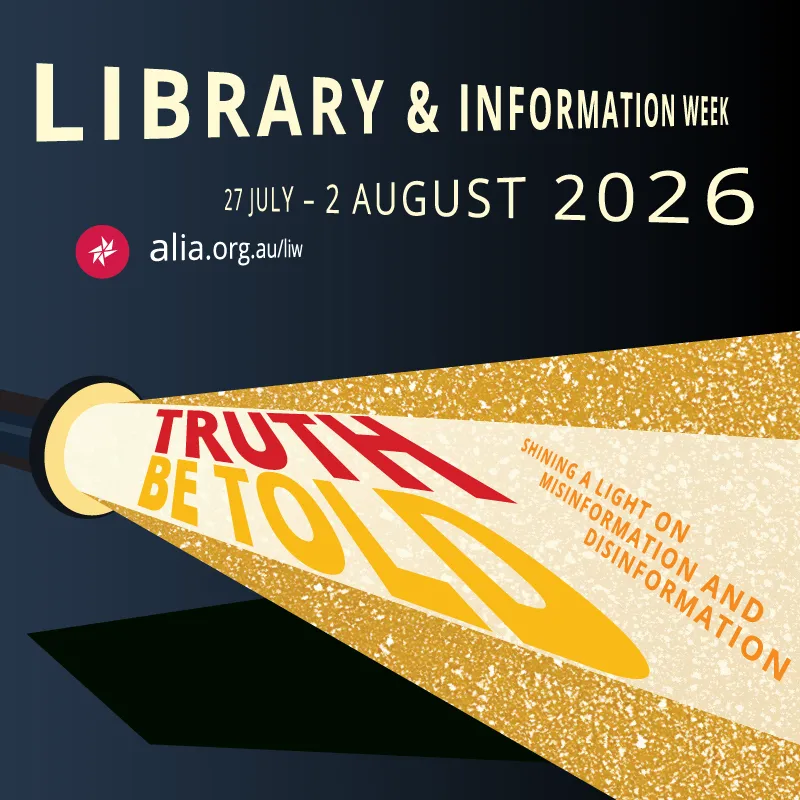
It is Library and Information Week, and this year’s theme is Truth Be Told. ALIA frames it around a plain observation: truth used to be something you could point to, and now it is stretched, shaped and sometimes buried. Libraries are where people go to dig it back out. If you have ever wondered whether that work still counts, recent events have made the case for libraries undeniable.
Two of Australia’s most recognisable musicians found their catalogues sitting inside AI training data they never agreed to. In the same fortnight, a licensed clone of Michael Caine’s voice narrated all of Homer’s Odyssey with his consent and his fee, and the most-played song on Australian radio turned out to have had AI help nobody thought to ask about.
What happened
Let’s start with perhaps the most upsetting, but sadly, least surprising. Bernard Fanning and Paul Dempsey ran their own work through a dataset search tool and found all of it: Powderfinger, Something for Kate, the solo records. A fake Powderfinger track had already surfaced from the same training data. Fanning called using an artist’s own songs to train the tool that imitates them dehumanising, and that is exactly what it is. When the raw material is the artist’s own work, used without consent, the output is a dystopian machine nightmare, even though it might sound uncannily like the music we know and love.
The next report is something that might have slipped beyond our notice more easily. Between 17 and 20 July, Joanna Stern found ten AI-generated fake versions of her own book on Apple Books within days of the real release. Kashmir Hill found a fake biography of herself, then thousands more for sale. Cover design, blurb and storefront ranking told buyers nothing. This keeps getting reported as famous authors being impersonated. What is more concerning are the ordinary, less-searched topics and authors where nobody would think to check. The high profile cases are obvious, but the devil is in the detail.
The next situation is where it really gets complicated, and where the way to respond is less clear. Michael Caine licensed his voice to ElevenLabs, and an AI clone now reads the Odyssey, timed to be released alongside Christopher Nolan’s film. In this case, the creator consented and was in fact well paid. Yet Michael Caine never read a word of the Odyssey. Is a licensed voice clone a performance, or just the very well-dressed absence of one? James Earl Jones and Jeff Bridges made comparable agreements over voice and likeness. The consent is real in each case, but the decision to support this category of AI generated content still needs to be made. A new artist starting out today is now not only competing with their peers. With AI, they may now need to compete with celebrities too old to continue working, or even those recently deceased. So where do we stand when the artist hands that ownership over of their own volition? You can see why they would. If an ageing performer can secure an income for their family far into the future, the temptation is human and entirely understandable. But do we value fabrications of their talent, or the real talent of those in the here and now?
There is recent evidence that most people don’t seem to really care either way. Josh Fawaz’s cover of “Like a Prayer” became the most-played song on Australian radio and passed 35 million Spotify streams before anyone publicly asked whether AI helped make it. The artist has since added a credit to AI on Spotify, but the response to the entire episode by the general public has been a shoulder shrug. So are we wasting energy trying to determine whether people can tell synthetic from human, when, at 35 million streams, it doesn’t seem to matter?
How do we measure the importance of protecting human creativity against the power of convenience, efficiency and the almighty dollar?
The Prime Minister has staked out a position worth holding him to:
The Government will also ensure the strongest possible protection for Australian artists and media. Our approach will ensure Australian writers, artists and journalists retain ownership over their work, meaning no company should use Australian creative works to train AI without the artist’s control.
— Prime Minister of Australia (2026)
That commitment matters. Notice what it does not reach: the artist who signs their ownership away willingly.
What the evidence says
Research helps here, because it turns a general sense of unease into something concrete.
Hintze et al. (2025) built a closed loop between an image generator and an image describer and let it run. Whatever the starting prompt, the outputs collapsed onto a few conventional motifs: cityscapes, cathedrals, pastoral landscapes, lighthouses. The system forgot where it began, producing what the researchers called “visual elevator music”. The cultural flattening that this demonstrates should be a very real concern, as the more AI generated content is distributed, the more it will happen, regardless of whether the original creators gave credit or not.
From a context closer to home, educators should also be considering whether they should be sharing their learning design in ways that allow it to become grist for the AI data mill. Trust et al. (2025) analysed 310 AI-generated civics lesson plans containing 2,230 activities from ChatGPT, Gemini and Copilot. Measured against Bloom’s taxonomy and Banks’ multicultural integration model, the plans rarely cultivated higher order thinking and left out the experiences of marginalised people. If you have ever looked at an AI-generated unit and found it competent and somehow lifeless, that study gives you language for the feeling.
Younas and Zeng (2026) make the same case philosophically in a commentary shared in AI & Society: a system built to optimise and classify flattens plural ways of knowing into one measurable output.
So this situation plays out in many different ways. We are rightfully aware of the need to protect identity, likeness and intellectual property, and regulations and legislation are being developed to limit what is basically unlawful theft. The potentially bigger concern are the licensed materials, where no law is broken. When the creator gives permission as Michael Caine and others have done, or makes their content freely available (as I am doing through this newsletter, and what I have always done as part of my commitment to open education and sharing), there is a much more challenging issue. What will regulate the slow crowding out of new voices by permissioned versions of the voices we already have, and the flattening of culture as the outliers, nuance and cultural differences are lost through the application of a flat intelligence of the algorithm upon the data set?
What practice asks
So what does Truth Be Told actually ask of us this week?
The verification question has moved, and we are still catching up. Knowing who the creator supposedly is no longer settles anything. Provenance is the work now: what the licence covers, who agreed to what, whether a human even made the thing in the first place, and how that matters.
For library and information professionals, that means a verification step before any purchase or recommendation of non-fiction and biography, or in fact any ebook from the major storefronts. Apple and Amazon have conceded they are losing this fight at scale, despite regulations in place, so the storefront cannot do our filtering. If you teach media literacy through music, the Fawaz case is a local example that popularity is not a verification signal, and it is likely at the moment that students will know the song.
The harder call sits with collection development policy, and I don’t think there is a comfortable answer. Licensed synthetic content is legal, often well made, and possibly cheaper. Choosing not to buy it, platform it or shelve it is a statement of ethics and values rather than a compliance decision: we value human work made in the present, and emerging creators deserve their own time and space rather than a market saturated with the permissioned ghosts of everyone before them. If it is not profitable, it stops being made. Our purchase orders are a vote whether we intend them that way or not. The flood of AI generated content and its bland aesthetic is perhaps not something we can stop, but we can continue to build the capabilities and awareness of others to recognise, respond and actively choose the human wherever we can.
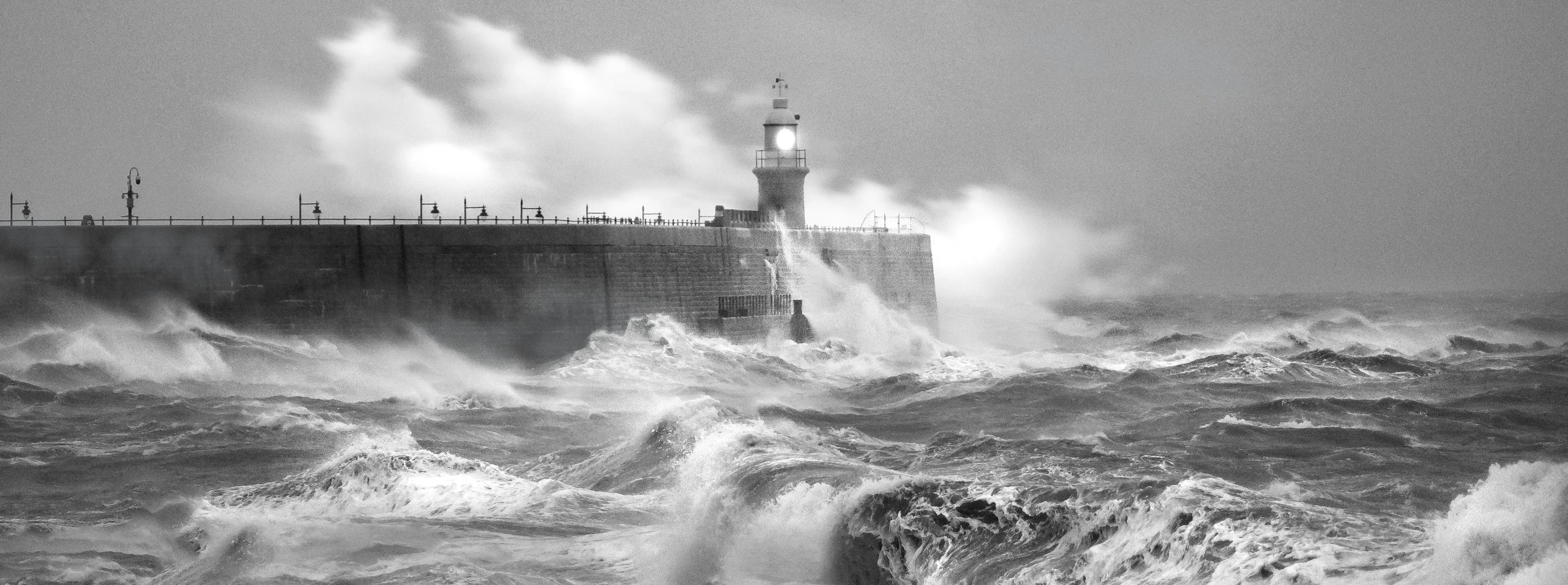
That loop in the Hintze et al. (2025) study kept converging on lighthouses. Maybe we need to be the lighthouse for those lost in this storm of synthetics.
Library and Information Week 2026 runs from 26 July to 2 August. Details at ALIA.
References
Hintze, A., Proschinger Åström, F., & Schossau, J. (2025). Autonomous language-image generation loops converge to generic visual motifs. Patterns. https://www.cell.com/patterns/fulltext/S2666-3899(25)00299-5
Prime Minister of Australia. (2026). AI & Australia’s interests [Media release]. https://www.pm.gov.au/media/ai-australias-interests
Trust, T., Maloy, R., Xu, C., & Pelletier, K. (2025). Civic education in the age of AI: Should we trust AI-generated lesson plans? Contemporary Issues in Technology and Teacher Education, 25(3). https://citejournal.org/volume-25/issue-3-25/social-studies/civic-education-in-the-age-of-ai-should-we-trust-ai-generated-lesson-plans
Younas, A., & Zeng, Y. (2026). Metric monoculture: How AI’s flat intelligence erases cultural wisdom. AI & Society, 41(2), 1325–1326. https://doi.org/10.1007/s00146-025-02515-3