

Too much of anything is not good for us, but tell that to fans of (insert trend here)-maxxing. Back when I went to parties back in the early 1980’s, my friends and I happily participated in lolly-maxxing and for most of my life I’ve been a huge fan of sleep-maxxing. Of course, being firmly (and happily) placed in GenX, I never actually used these terms; but depending on your social media algorithm, or the age of your kids, you have most probably heard of the trend of appending -maxxing onto whatever you are fixating on in the pursuit of extreme optimisation.
This post was triggered by a rash of articles such as this one and a recent Reddit post asking why there are still no sardines on the shelf at Woolworths.
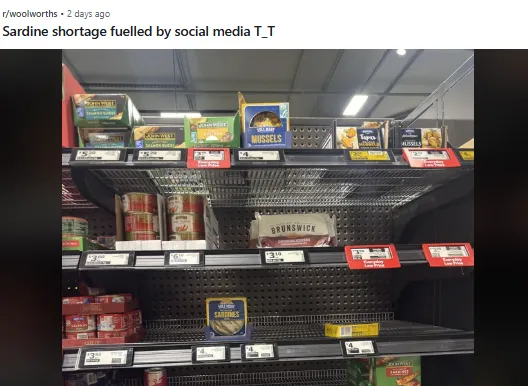
Now we are finally getting cottage cheese back on the shelves, it seems like sardines are the next fashionable food item to be the focus of -maxxing. Of course the situation is not so simple – the grocery shelves just haven’t looked the same since Covid for a variety of reasons, not all social media related. But the fact that what we used to call a ‘fad’ is now a major contributor to shortages on grocery shelves got me thinking about the power of online influencers and the impact they have not only on the lives of those who follow them, but everyday ‘old’ and ‘out of touch’ people like me.
My amazing (and younger/cooler) colleague Krystal Gagen-Spriggs recognised the power of the influencer much earlier than me and is nearing the completion of her PhD thesis which focuses on the role of the teacher librarian as an influencer on the reading styles of young people. While you wait for her thesis to be published, you can check out her most recent publication, Teacher librarians as engineers of influence, in Access journal.
My angle is slightly different, and definitely not a new discovery, but does bring home once again the reason why we so badly need a school library staffed with qualified professionals in every school.
We all know that we live in times where trust is in short supply. The Edelman Trust Institute has been reporting on trust in society for 25 years, and this year’s report is titled Trust amid Insularity. In 2026, the Edelman Trust Barometer, documents a significant global pattern: as trust in institutions, government and media declines, people retreat into trusted circles of those they know personally, sources that resemble their own experience and community, and information that confirms their existing worldview. This is insularity as a coping mechanism.
The social media influencer is perfectly positioned to take advantage of this insularity. A recent meta-analysis by Barari et al. (2026) which evaluated the effectiveness of influencers mentions ‘trust’ 20 times and suggests that influencers’ success in persuading followers to take up their endorsements is based upon the trust they build by being accessible, relatable and aspirational – in other words, by being someone people feel can be safely included in their trusted circles. Getting advice or suggestions from another human to whom one feels they can relate to seems a more sensible option at a time when organisations, governments and huge media and technology conglomerates seem more interested in making bank or gaining power than the individuals they claim to serve.
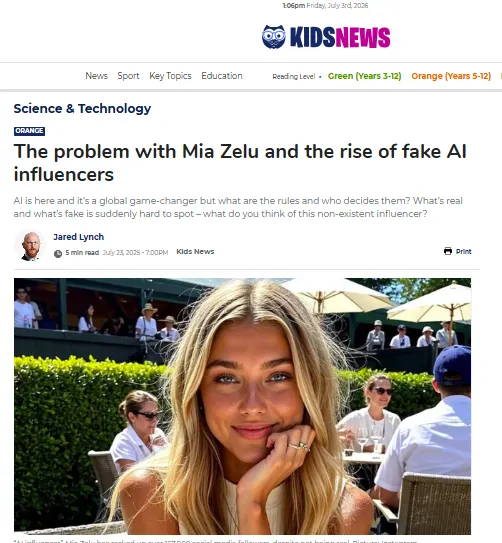
This matters enormously for schools. Regardless of social media ban/delays and even in spite of them, children and young people are immersed in this atmosphere of distrust, and the idea that they will trust peer networks and individuals they admire or aspire to be like over authoritative but ‘distant’ sources is nothing new. What is new is the pervasiveness and sophistication of influencers (a growing number of whom may not even actually exist) the consequential vulnerability and exposure that children and young people experience every single day.
All of this makes the relational dimensions of school library practice even more important: the human connection, the visible expertise, the trust built through consistent, reliable service. Yes, children can and do create strong and trusted relationships with their teachers. But school library professionals can maintain a different and potentially more influential connection with students as they are not usually associated with either the academic or sporting achievements (or lack thereof) of the students they engage with. As much as the school library is a vital ‘third space’ beyond the classroom or the playground/sports fields, school library professionals are important ‘third space people’; trusted adults that students can freely and frequently contact, share friendly conversation on innumerable topics, and who are likely knowledgeable about the niche interests and trends that underpin collection development for leisure and learning.
This post has shared nothing new. It simply reminds us that perhaps if more students had the opportunity to access a school library and connect with qualified professionals who work in that library, perhaps fewer would be turning to advice from influencers who most definitely don’t have their individual interests at heart. And maybe, we’d have more sardines on our shelves, even if the catch was poor this season.
References:
Barari, M. M., Eisend, M., & Jain, S. P. (2026). A meta-analysis of the effectiveness of social media influencers: Mechanisms and moderation. Journal of the Academy of Marketing Science, 54(1), 28-48.
Edelman. (2026). 2026 Edelman Trust Barometer global report: Trust amid insularity. Edelman Trust Institute. https://www.edelman.com/sites/g/files/aatuss191/files/2026-01/2026%20Edelman%20Trust%20Barometer%20Global%20Report_01.21.26_0.pdf
Gagen-Spriggs, K. (2026). Teacher librarians as engineers of influence. Access., 40(2).
Featured image: Photo by Fengyou Wan on Unsplash



How can the trend of “library-maxxing” encourage people to read more, explore new interests, and make better use of library resources? What can libraries do to attract younger generations and remain relevant in the digital age? Thank You, Regard asya ⋮⋮⋮⋮⋮⋮⋮⋮⋮⋮⋮⋮⋮⋮⋮⋮⋮⋮⋮⋮